
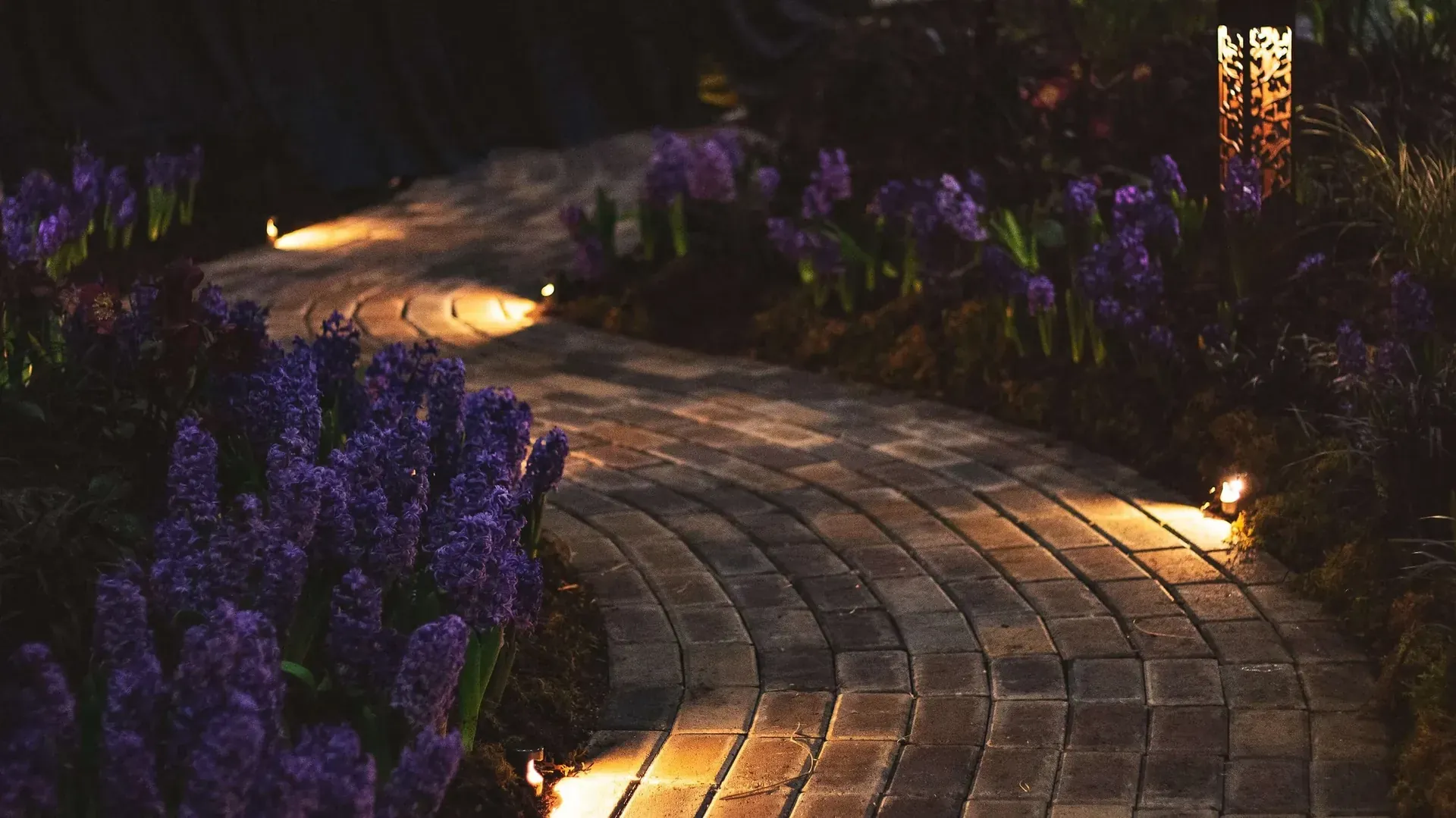
Low-Voltage Landscape Lighting
Executive Electric Inc. designs low-voltage landscape lighting that guides paths and shows off plants safely. Licensed C10, CSLB #1133790.
5.0

Related services: permanent outdoor lighting.
What Low-Voltage Landscape Lighting Is
Low-voltage landscape lighting uses a transformer to step power down for path lights, uplights, and wash fixtures in the yard. The cable runs are safer to handle than full line voltage in garden beds, and LED fixtures keep energy use low. Executive Electric Inc. installs these systems as a licensed C10 contractor (CSLB #1133790). We still treat the line-voltage feed and transformer placement with full electrical care—because that side of the system is not “toy wiring.”
Benefits for Nighttime Living
Path lights reduce trips on steps and walkways. Uplights show tree form and wall texture after dark. Soft washes make patios usable without blasting neighbors. Well-planned zones let you run dinner lighting without lighting the whole lot. LEDs hold color longer than old halogen landscape lamps. A neat transformer setup also beats a tangle of plug-in spotlights from a big-box shelf.
Problems We See in DIY Landscape Kits
Voltage drop makes distant lights dim when cable is too thin or runs are too long. Transparent transformer and cable notes on a bid are part of what counts as a fair price for electrical work. Transformers overload when too many fixtures share one tap. Shallow cable gets cut by edging tools. Cheap connectors corrode after one wet season. Photocells fail and leave lights on at noon. We size transformers, choose wire gauge, and bury or protect cable so the system stays bright and even.
How We Design and Install
We walk the yard at dusk when possible to see real shadows. If you are still shortlisting contractors, the best way to find an electrician is a useful checklist. You point out favorite plants, dark steps, and gathering spots. We sketch zones: path, accent, and living areas. Then we place the transformer near a GFCI-protected outlet or hardwired feed with room to service it. Cable routes follow beds and edges with clean connections. After aiming, we check voltage at the farthest fixtures and adjust taps or wire runs as needed.
Fixture Choices That Work Outdoors
Path lights guide feet without runway glare. Spotlights accent trunks and architectural plants. Well lights hide in grade for uplighting. Deck and step lights need careful placement to avoid hotspots. Brass and quality composites hold up better than thin stamped metal. We match beam spread to plant size so you do not blast a small shrub with a narrow sports-style beam.
Safety and Code-Minded Details
Transformers need listing, proper covers, and clear labeling. Line-voltage connections belong on protected circuits. We keep low-voltage cable away from sharp landscape steel and irrigation blades where we can. Timers and smart controls should not defeat GFCI protection. These details sound small until a wet-season trip knocks out half the yard. Doing them once keeps nights calm.
Tips to Keep the System Healthy
Tell landscapers where cable runs before they dig. Trim plants that grow over path lenses. After storms, glance for leaning fixtures and exposed wire. Do not keep adding random kit lights to a transformer that is already near capacity—ask us to expand the system correctly. Keep mulch from burying well lights completely so heat can escape and lenses stay findable.
When to Call Executive Electric Inc.
Call when paths are dark, when a transformer hums and trips, or when half a zone went dim. Call before a major landscape refresh so lighting and planting plans match. If you want indoor controls or app schedules, we can integrate them cleanly. Licensed service under CSLB #1133790 means the pretty garden lights still connect to a safe electrical backbone.
Layering Landscape Light With House Light
Landscape lighting works best next to permanent outdoor fixtures on the structure. Soft garden light plus a lit entry feels complete. We can coordinate color temperature so the yard and eaves match. Separate switching prevents running everything when you only need the path to the gate. That layered approach is how outdoor nights feel designed—not accidental.
Voltage Drop Math in Everyday Words
Low-voltage systems lose pressure—voltage—along long thin wires the same way a long hose loses water pressure. Far fixtures go dim first. We choose thicker cable, shorter loops, or higher taps on the transformer to keep brightness even. Measuring at the fixture is how we prove the design. Guessing by eye at dusk is not enough. Executive Electric Inc. treats landscape lighting as real electrical engineering at garden scale.
Transformer Placement and Service Access
Transformers want shade, airflow, and a spot you can reach without wrestling vines. Mounting too low invites splash and mower risk. Mounting too high makes service hard. We plan GFCI-protected feeds, drip loops, and clear labels for zones. If you add lights later, spare capacity and empty taps save a full swap. A tidy transformer wall is a sign the system was installed by people who expect to service it years later.
Plant Growth and Aim Drift
Gardens change. A spotlight aimed at a young tree will be wrong when the canopy fills. Path lights disappear into expanding shrubs. We show you how to loosen and retarget heads safely with power off when appropriate, or we offer tune-up visits. Designing with growth in mind—placing fixtures just outside future drip lines—reduces constant relocation. Lighting should mature with the landscape, not fight it each spring.
Irrigation and Lighting Peace Treaty
Irrigation techs cut landscape cable by accident more than almost anyone else. We mark routes, bury at thoughtful depths, and share simple maps when helpful. Keep valve trenches and lighting trenches from becoming a single mystery ditch. If both systems are installed in one project, coordination day saves repair day. Tell your garden crew that low-voltage lines exist before they dig edging trenches.
Creating Mood Without Glare
Good landscape light reveals texture: bark, stone, water ripple. Bad landscape light blinds walkers and leaves harsh cones on grass. We shield lamps, choose softer wattages, and bounce light where possible. Entertaining zones can be brighter while distant beds stay subtle. Licensed install under CSLB #1133790 still cares about beauty—because a safe yard should also feel welcoming after sunset.
Zones for Everyday Versus Entertaining
You may want soft path light every night and stronger patio light only when friends visit. Separate zones make that easy. We label transformer taps and switches so anyone in the household can run the right scene. Entertaining brightness should still avoid neighbor glare. A two-zone plan is often enough. Complexity is optional; clarity is not.
Steps, Grades, and Trip Hazards
Uneven grades and garden steps need careful aiming so risers are visible without glare in walkers’ eyes. We prefer low glare path heads and shielded step lights. Cables should not create new trip lines across routes people use in the dark. Safety is the first job of landscape lighting; beauty follows when feet already feel secure.
Common Questions
Clear answers to the questions customers ask most before they book this service.
The garden-side cable runs at a lower voltage, which is friendlier in soil and beds. The transformer’s line-voltage side still needs proper electrical installation. We handle both parts correctly.
Voltage drop from long runs or thin cable is the usual cause. We resize wire, shorten loops, or rebalance transformer taps so brightness stays even.
Often yes. Adding fixtures without spare capacity causes trips and early failures. We calculate load before expanding a zone and upgrade equipment when needed.
Yes. Timers, astronomic clocks, and smart controls are common. We install controls that respect GFCI protection and are easy for you to adjust seasonally.
We route through beds and edges when possible and restore disturbed areas carefully. Some projects use shallow trench methods suited to the landscape. We discuss access before work starts.
Service Areas
We proudly serve homeowners and businesses in these 14 Bay Area locations.